
Calcium Carbonate
Carbonate mineral associated with acidity correction and calcium supply.
- Family
- Carbonate mineral
What it is
Calcium Carbonate
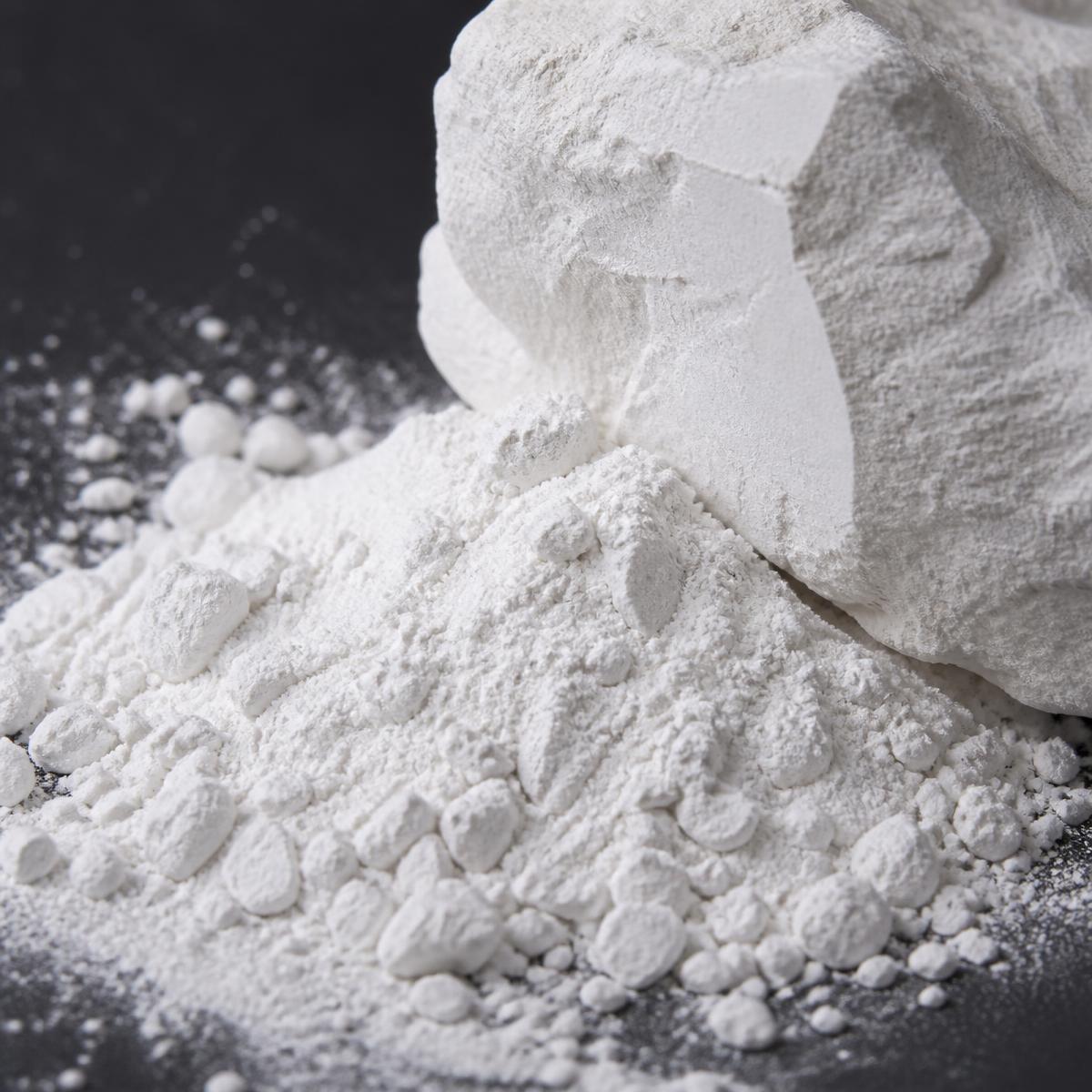
Ground limestone or marble: a natural mineral rich in calcium carbonate (CaCO₃), milled and classified in plant. In agriculture it is used mainly as a soil acidity corrector and as a low-solubility calcium source. Its agronomic behaviour depends on grind fineness, neutralising value and purity.
What it delivers
- Neutralises acidity and raises pH in acid soils.
- Reduces problems linked to excess aluminium or manganese.
- Supplies calcium, with lower solubility and slower action than gypsum.
- Improves the root environment and nutrient availability in acid soils.
- Widely used material in acid soils or soils acidified by nitrogen fertilisation.
Applications
Applications
- 01
Acid soil correction and liming programmes.
- 02
Calcium supply for acidity-sensitive crops.
- 03
Cropland, pastures, orchards and intensive production, subject to soil analysis.
- 04
Agro-industrial uses subject to specification.
How it works
How it works
Calcium carbonate reacts with soil acidity and raises pH. Its low solubility makes the effect slower and more localised, especially without incorporation. It therefore does not replace agricultural gypsum where the problem is subsoil sodicity: for calcium-sodium exchange, gypsum is usually more suitable. Carbonate: corrects acidity and raises pH. Gypsum: supplies calcium and sulphur and can address sodicity without liming.
- 01
CaCO₃
Reacts with soil acidity
- 02
H⁺ → H₂O + CO₂
Protons neutralised and pH rises
- 03
Ca²⁺
Calcium added to the exchange complex
- 04
Al³⁺
Aluminium precipitated, lower toxicity in acid soils
Frequently asked questions