
Diatomite
Natural siliceous mineral with physical action on insects, aimed at stored grain and facilities.
- Family
- Functional mineral
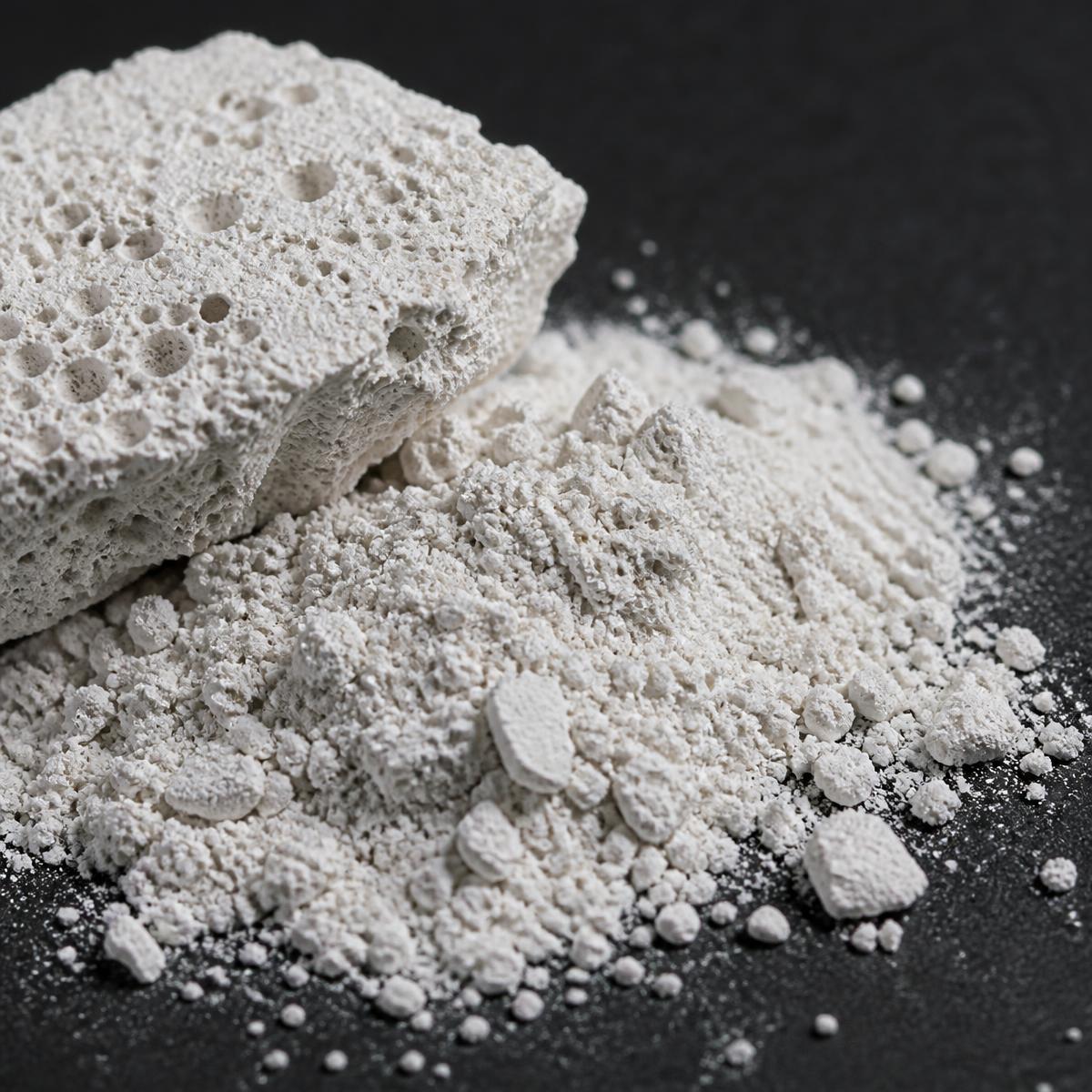
What it is
Diatomite
Mineral material formed by fossilised diatom remains, rich in amorphous silica. Its high porosity and specific surface explain its behaviour as a functional mineral and its physical action on insects in dry environments.
What it delivers
- Physical action - abrasion and dehydration - rather than chemical action on insects.
- Physical mode of action: a different resistance profile from conventional insecticides.
- Attractive for organic or low-residue management.
- Porous structure and high specific surface: also works as carrier and absorbent.
- Natural mineral, consistent with a sustainable-agriculture mineral range.
Applications
Applications
- 01
Physical insect control in dry environments.
- 02
Stored grain protection: silos and warehouses.
- 03
Farm facilities and animal bedding.
- 04
Complement in integrated and low-chemical management programmes.
- 05
Mineral carrier and absorbent in formulations subject to specification.
How it works
How it works
It does not act as a conventional chemical insecticide: its effect comes from cuticle abrasion and insect dehydration. It works best in dry environments, as moisture sharply reduces effectiveness. Use must match grain destination, applicable regulation, authorised rates and operator safety conditions, since the fine dust can be irritating if inhaled.
- 01
SiO₂·nH₂O
Amorphous silica with a microporous structure
- 02
Superficie específica
High contact surface and adsorption capacity
- 03
Acción física
Cuticle abrasion and water loss in the insect
- 04
Ambiente seco
Moisture sharply reduces effectiveness
Frequently asked questions